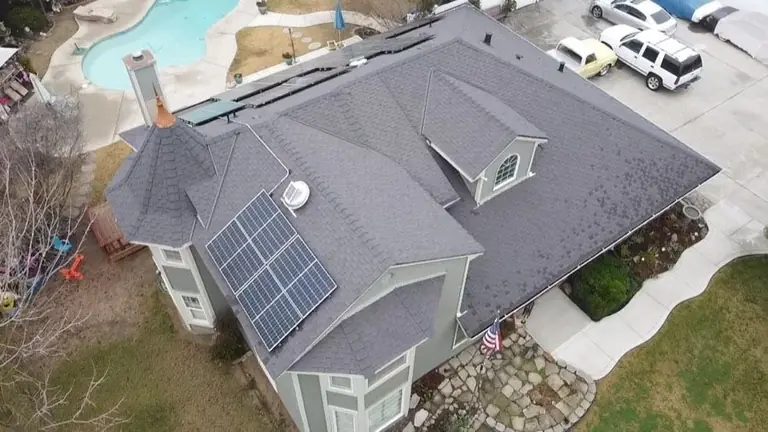
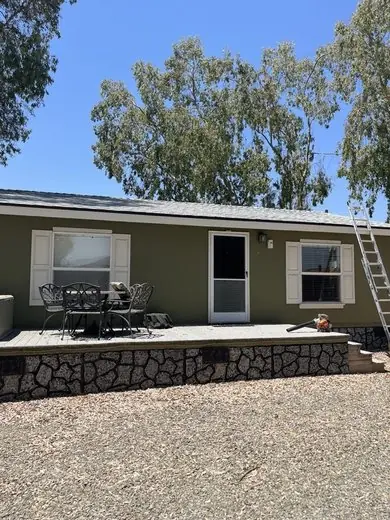
Storm damage roof repair & insurance, Central Valley & East Bay.
Wind-lifted shingles, fallen branches, hail, or debris impact after a storm? NuShake documents the damage, tarps the roof, and works directly with your insurer — State Farm, Allstate, Farmers, USAA, AAA, Mercury. Manufacturer-certified workmanship across the Central Valley & East Bay. Call (209) 253-0506. CSLB #1142280.
Why Central Valley storms hit older roofs harder
Central Valley roofs take a beating before any storm arrives. Summer heat in Stockton, Manteca, and Modesto often tops 100°F, and that heat dries out asphalt shingles (the roof's protective top layer) a little more each year. When a winter wind event hits, those brittle shingles crack and lift far more easily. Tule-fog winters then keep roofs damp for weeks, so a small storm opening can turn into a real leak. Valley dust and orchard debris also pile up in gutters and roof valleys, holding water right where wind-driven rain gets in.
Signs of storm damage on your roof
After a wind, hail, or debris event, most damage shows up from the ground or a quick attic check. Walk your yard and look up. Here is what to watch for, and why it matters.
| Missing, lifted, or curled shingles. Wind breaks the seal strip that holds each shingle down. Once that seal lets go, tabs flap, tear, and blow off. |
| Cracked shingles and granule loss. Check your gutters and downspout splash areas for piles of granules — the sandpaper-like grit that shields the asphalt below. Bare black patches on the shingles point to hail or impact. |
| Dented or displaced flashing, vents, and ridge caps. The metal around chimneys, valleys, and pipe boots dents under hail and lifts in high wind. That metal is what keeps water out at the seams. |
| Debris impact. Look for fallen branches, blown-in roof or fence pieces, and punctures from windborne objects. Even a small puncture opens a path for water. |
| Interior signs. Water stains or discoloration on ceilings and upper walls, damp attic sheathing (the wood deck under the shingles), or active drips during the next rain all signal a roof that is letting water in. |
Not sure what you are looking at? NuShake's free estimate walks the storm-related areas. For an adjuster-ready written photo report you and your adjuster can both use, our documented inspection is $349 in the Central Valley or $525 in the Bay Area. Call (209) 253-0506.
The insurance claim process, step by step
Filing a storm claim is less stressful when you know the order of operations. Here is how it usually goes, and where NuShake supports you at each step.
| Document the damage. Take dated, close-up photos before anything is touched. NuShake's free estimate walks the storm-related areas; for an adjuster-ready written photo report you can hand straight to your carrier, our documented inspection is $349 in the Central Valley or $525 in the Bay Area. |
| Emergency tarp or temporary protection. Stop further water from getting in, fast. NuShake can tarp the roof so secondary damage does not grow. Most policies make this mitigation the homeowner's duty. |
| File the claim. Call your carrier and open a claim number. NuShake's documentation gives you the specifics to report. |
| Meet the adjuster. Your carrier sends an adjuster to inspect the roof. A NuShake crew member can attend and walk through the findings with them. |
| Agree on the scope of loss. The carrier and contractor line up on what is covered and the repair scope. NuShake provides a written scope of loss in a format adjusters work with. |
| Repair or replace. Once the claim is approved, NuShake completes the work with manufacturer-certified workmanship. |
| Final inspection and closeout. Confirm the work, submit the final documentation, and release any remaining claim payment. |
NuShake works with all major carriers — State Farm, Allstate, Farmers, USAA, AAA, and Mercury. Financing is available through Service Finance for any out-of-pocket portion.
What storm insurance typically covers — and what it doesn't
Coverage comes down to one idea. Sudden, accidental storm damage is usually covered. Gradual decline is not.
Usually covered
- ✓ Sudden wind damage — lifted or torn shingles, blown-off sections
- ✓ Hail impact and bruising
- ✓ Fallen trees and large branches
- ✓ Windborne debris punctures
- ✓ Interior water damage from a sudden opening in the roof
Usually NOT covered
- Age and general wear-and-tear
- Deferred or neglected maintenance
- Pre-existing damage that predates the storm
- Roofs already at end of life — your carrier may pay only the storm-related portion
Every policy is different. Deductibles, roof-age limits, and actual-cash-value versus replacement-cost terms all vary, so check your declarations page. NuShake documents only what is genuinely storm-related — honest, accurate, no inflated claims.
Want to know where you stand? Book a free written estimate. Call (209) 253-0506.
Our storm-response process
When you call NuShake after a storm, here is exactly what happens.
| Call and rapid response. Reach us at (209) 253-0506. Have an active leak during business hours? We work to fix or tarp it the same day. |
| Free estimate. We climb the roof and document every storm-related finding in a report you can keep. |
| Emergency tarp if needed. Temporary protection so water damage stops spreading while the claim moves. |
| Insurance support. We provide a written scope of loss, work with all major carriers, and can attend the adjuster visit. |
| Repair or replacement. Manufacturer-certified workmanship — GAF Master Elite, GAF Gold Elite, GAF Solar Certified, CertainTeed Select ShingleMaster, and Owens Corning Preferred. Financing through Service Finance if you have an out-of-pocket portion. |
No high-pressure sales, ever. Every job is owner-operated, licensed CSLB #1142280.
Frequently asked questions — storm damage roof repair
Get a free storm damage repair quote.
No obligation. Active leak after a storm? Call (209) 253-0506 during business hours and we fix or tarp it the same day.
- ✓ Licensed — CSLB #1142280
- ✓ 5 manufacturer certifications — GAF, Owens Corning, CertainTeed
- ✓ Written quote — before any work
- ✓ No high-pressure sales — ever
Schedule a free estimate.
Get a written damage report.
NuShake documents your roof before your adjuster arrives. Owner-operated across the Central Valley & East Bay. CSLB #1142280.
540 Frontage Rd, Ripon, CA 95366 • office@nushake.com • CSLB #1142280
Related Bay Area storm and roof repair guides
Storm season in the Bay Area means atmospheric rivers, wind-driven rain, and the kind of multi-day saturation that finds every weak point in an asphalt or tile roof. Before or after the storm, these companion guides cover what NuShake homeowners look at most often.
Recent roofing work.